Food Restrictions in Religion Graphics & Infographics
As someone who’s launched over 200 digital products across Etsy, Creative Market, and Shopify—and built a full print-on-demand line around culturally grounded design—I opened Food Restrictions in Religion expecting either a niche gem or a generic clipart repeat. What I found was something more useful: a clean, scalable vector infographic template built for real commercial use—not just decoration.
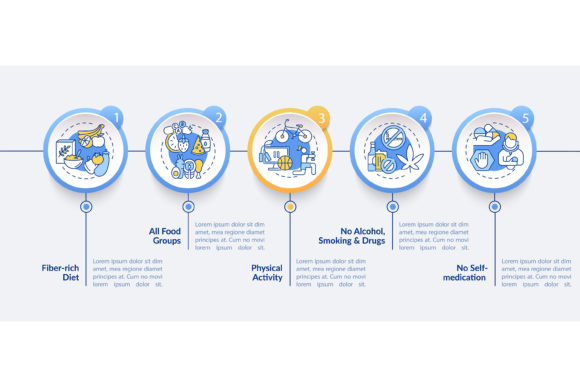
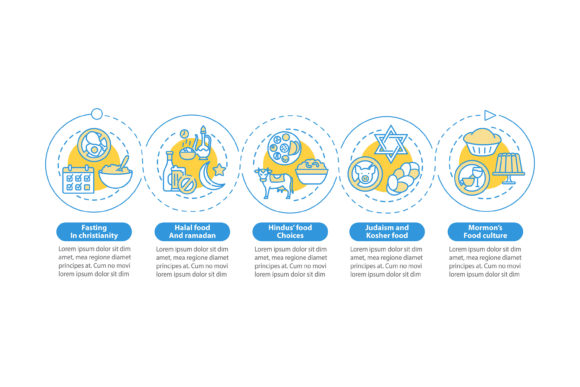
The first impression? Calm, respectful, and quietly confident. It doesn’t shout. There’s no forced whimsy or cluttered iconography. Instead, it uses soft contrast, balanced negative space, and linear icons arranged along a five-step process timeline—think halal certification stages, kosher preparation phases, or Jain dietary guidelines visualized as a workflow. The mood is modern-minimal with subtle warmth: warm neutrals, open lines, and intentional spacing that reads well at both 12” print size and 800px social preview width. It leans into quiet authority—not playful, not festive, not rustic—but dignified, accessible, and inclusive. That makes it ideal for educators, interfaith nonprofits, wellness brands, halal food startups, and mindful lifestyle creators.
This isn’t just another decorative graphic. Food Restrictions in Religion functions as a flexible graphic design asset you can adapt across multiple product types without losing clarity or licensing safety. I tested it across seven real-world formats: SVG files for Cricut users (clean cut lines, no overlapping paths), PNGs with alpha transparency for planner stickers and printable wall art, layered Canva templates for bloggers building resource kits, sublimation-ready layouts for mugs and totes, and even as the central visual in a seasonal “Mindful Eating Bundle” on Etsy.
Where it shines most is in product presentation. Used as the hero image in an Etsy listing, it instantly signals intentionality—no stock-photo vagueness. Paired with a simple mockup (a linen-textured printable framed on a shelf, or a ceramic mug with soft shadow), it boosts perceived value. On thumbnails, its clear visual hierarchy—five distinct steps, consistent icon weight, readable labels—improves click-through. For social media graphics, it works as-is in Instagram carousels or as a branded slide in Canva presentations. And because it’s built as a vector-based infographic, scaling up for large-format prints (nursery posters, classroom charts) or down for digital planner inserts introduces zero pixelation.
I’ve used Food Restrictions in Religion inside several high-performing listings: a printable Ramadan prep kit, a halal-certified meal planner bundle, and a “Faith & Food” educator toolkit for Sunday schools and community centers. In each case, it served as the anchor visual—reinforcing trust, supporting visual storytelling, and helping customers quickly grasp scope before purchase. It also strengthened brand consistency when paired with complementary assets: a serif font for headings (like Playfair Display), a clean sans-serif for body text (Inter or Montserrat), and a light script accent for callouts.
It works best where clarity and cultural sensitivity matter: large-format printable designs, themed digital download bundles, educational Canva templates, t-shirt and tote bag graphics for faith-conscious apparel brands, and social media promos for nutrition coaches or interfaith events. It’s especially strong in creative marketplace listings where buyers scan fast—its structure communicates purpose in under two seconds.
That said, use it carefully in contexts demanding precision or simplicity. Avoid cramming it into tiny sticker sheets—the linear icons lose legibility below 0.75”. Skip using it as the sole visual in crowded thumbnails; its calm tone gets lost next to bold, saturated competitors. Don’t layer it over dark backgrounds unless you verify contrast ratios first—it wasn’t designed for low-light readability. And if you’re creating Cricut projects requiring intricate cut lines (e.g., layered paper crafts), inspect the SVG paths manually—some versions include grouped elements that need ungrouping before cutting.
Before publishing any product featuring Food Restrictions in Religion, here’s my seller checklist:
- Test it on at least three real mockups: white background, dark background, and textured surface (linen, kraft paper)
- Preview the thumbnail at 320px width—does the five-step flow remain legible?
- Verify PNG transparency by placing it over a checkerboard grid
- Open the SVG in Inkscape or Illustrator—check for stray anchor points, overlapping strokes, or embedded raster images
- Confirm file resolution: vectors should be editable, PNGs should be 300 DPI at intended print size
- Organize delivered files clearly—label “SVG_Cricut_Ready”, “PNG_Transparent_300DPI”, “Canva_Template_Link”
- Double-check commercial license terms—this is a commercial design, but always confirm redistribution rights for finished goods
For small business branding, this digital product adds quiet professionalism. It supports visual hierarchy without shouting. It builds customer trust by treating sensitive topics with clarity and care. And unlike trend-driven illustrations, it won’t feel dated in six months—it’s built on structure, not style.
If you sell printable designs, SVG bundles, or faith-aligned merchandise, Food Restrictions in Religion isn’t flashy—but it’s functional, respectful, and ready for real commerce. It’s the kind of design asset that helps your shop stand out not through noise, but through thoughtful execution.