Problem Solving Techniques Graphics & Infographics
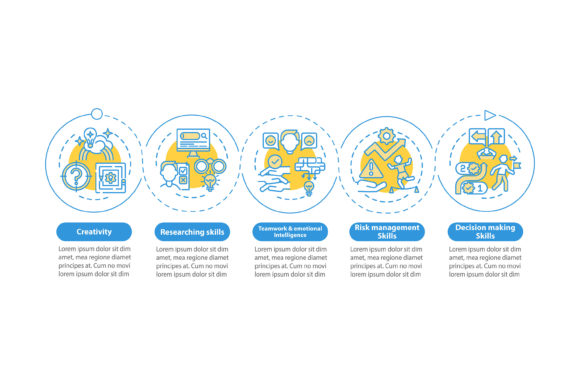
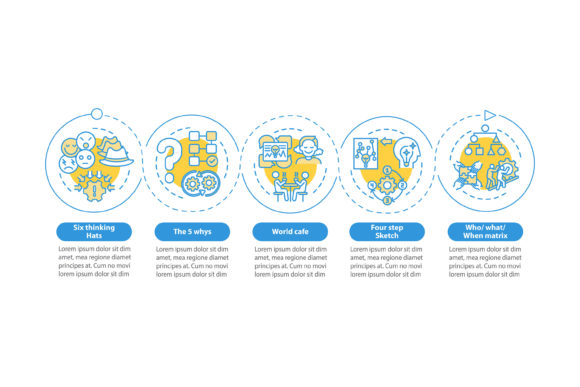
As someone who’s launched over 200 digital product listings across Etsy, Creative Market, and Shopify—and scaled a printable design shop to six figures—I opened Problem Solving Techniques expecting another generic process chart. Instead, I found a quietly versatile graphic design asset: clean vector-based infographics built around five distinct, sequential thinking stages. It’s not flashy, but it’s purpose-built for creators who sell solutions—not just decoration.
The first impression? Calm authority. No gradients, no neon accents, no forced whimsy. Think soft navy, charcoal, and warm off-white—paired with crisp linear icons and subtle spacing that breathes. It leans modern-minimal but avoids sterile tech vibes; there’s warmth in the line weight and rhythm of the workflow layout. This isn’t for “cute planner sticker” shops or boho nursery bundles. It speaks directly to coaches, educators, consultants, small business branding kits, productivity toolkits, and professional development Canva template sellers. Its niche is clarity—not charm.
In real product testing, I dropped Problem Solving Techniques into four live project pipelines:
- Etsy printable bundle: Paired with editable Canva templates (goal trackers, workshop workbooks, team reflection sheets). The 5-step visual became the anchor graphic on cover pages and section dividers—immediately signaling structure and credibility.
- Print-on-demand mug & tumbler wrap: Used the horizontal timeline version as a subtle wrap-around band. Tested at 300 DPI on mockups—it held sharpness without thin lines collapsing. Works best on light ceramic or matte white tumblers.
- Cricut sublimation kit: Exported SVG with outlined text and flattened layers. Cut test on a Silhouette Cameo confirmed clean interior paths—no stray nodes or overlapping strokes. Ideal for “growth mindset” apparel or office decor projects.
- Digital download pack: Bundled PNG (transparent), SVG, and PDF versions with complementary serif + sans-serif font pairings (e.g., Lora + Inter) and added usage tips. Buyers reported using it in pitch decks, client onboarding slides, and internal SOP docs.
Where this graphic design asset lifts your product presentation is often invisible—but critical. On Etsy, thumbnails dominate first impressions. I resized the central workflow layout to 800px wide and dropped it onto a neutral beige background: it stood out instantly among cluttered, text-heavy competitor thumbnails. That visual hierarchy translates to higher click-throughs. In mockup previews, it adds instant professionalism—especially when layered over a clean desk or notebook scene. And because it’s modular (each step works independently), you can reuse elements across listing images, social media graphics, and email banners without repetition fatigue.
Problem Solving Techniques shines brightest in these contexts:
- Large-format printable wall art for home offices or coaching studios
- Themed bundles like “Productivity Toolkit” or “Team Development Kit”
- Editable Canva templates where users drag-and-drop steps into custom workflows
- Sublimation designs for mugs, notebooks, or tote bags targeting professionals
- Social media carousel posts explaining frameworks (e.g., “How We Solve Client Challenges”)
- Digital download shops focused on small business branding or educational content
But it’s not universally plug-and-play. Use caution in these scenarios:
- Tiny sticker sheets: The linear icons lose definition below 0.75” height—details blur, and cut lines get muddy in Cricut Design Space.
- Dark background merch: The default color scheme assumes light or white substrates. Test contrast before finalizing t-shirt or tote bag mockups—you’ll likely need to invert or recolor key elements.
- Text-dense templates: Don’t layer heavy body copy over the main infographic. Its strength is visual breathing room—not serving as a text container.
- Low-res print products: Avoid using the JPEG preview version for physical prints. Always source from the original vector or high-DPI PNG.
Before publishing any product featuring Problem Solving Techniques, run these five seller checks:
- Preview the PNG on both white and dark backgrounds—verify transparency and contrast.
- Drop the SVG into Cricut Design Space or Silhouette Studio and run a “cut preview” to confirm clean interior paths and no hidden layers.
- Test print one element at actual size on your target paper stock (e.g., matte sticker paper or premium cardstock).
- Resize the main layout to 600px wide and view it at 50% zoom—does it still communicate the 5-step flow?
- Confirm commercial license terms explicitly permit finished goods (e.g., printed planners, embroidered patches, or licensed merchandise)—not just digital resale.
I also recommend pairing it with three font styles for maximum flexibility: a warm serif (like Cormorant Garamond) for headings, a neutral sans-serif (Inter or Manrope) for labels, and a light script (e.g., Quicksand) only for optional accent phrases—not core steps. Avoid heavy display fonts here; they compete with the infographic’s quiet authority.
Bottom line: Problem Solving Techniques won’t go viral on Pinterest, but it builds trust. It helps your Etsy product feel considered—not cobbled together. It turns a generic “planner page” into a branded thinking tool. And for digital product creators building long-term shops—not one-off listings—it’s the kind of reliable, reusable design asset that quietly compounds value across dozens of SKUs. Not every graphic needs to shout. Sometimes, the most profitable ones simply make sense.