Brain Health Vector Infographic Template
A Designer’s First Look: Clean, Calm, and Purposeful
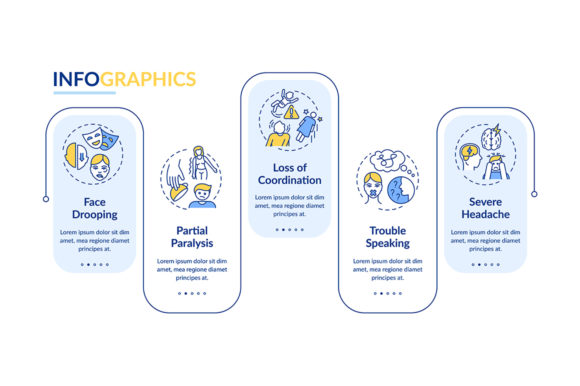
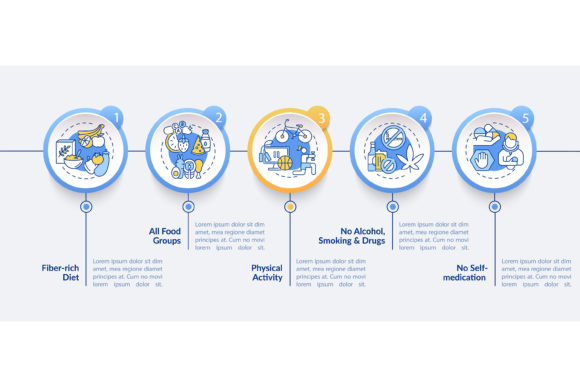
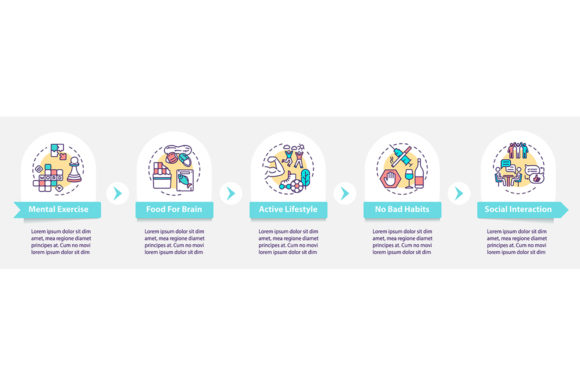
When I opened Brain Health Vector Infographic Template, my first thought wasn’t “Oh, another wellness graphic.” It was, “This feels like a quiet conversation—not a shout.” The layout breathes. Five linear icons trace a gentle, upward-moving timeline—no clutter, no forced energy. The vector lines are smooth but not sterile; the color palette leans into soft blues, muted teals, and warm greys—colors that translate beautifully to thread without needing heavy saturation or contrast tricks. As an embroidery designer who’s stitched everything from nursery pillows to boutique aprons, I immediately saw its potential: not as a standalone poster, but as a thoughtful, stitchable motif for products where calm intention matters—think baby milestone blankets, therapist office tote bags, or mindfulness-themed kitchen towels.
Where It Shines in Real Embroidery Projects
This isn’t a design built for flash—it’s built for resonance. I tested Brain Health Vector Infographic Template as a central motif on a medium-weight organic cotton tote bag (a favorite for wellness studios and small therapy practices). The linear workflow chart scaled cleanly down to 4.5 inches wide—still legible, still graceful. On a brushed cotton sweatshirt? It held up with minimal fill stitch density, letting the fabric texture peek through just enough to keep it handmade, not machine-perfect. For baby embroidery, I used it on a muslin swaddle with pale grey thread—soft, legible, and quietly meaningful. And as an embroidered patch? The clean icon shapes converted smoothly to satin-stitched outlines with subtle running-stitch connectors—no jagged edges, no overworked corners.
Etsy sellers will appreciate how naturally it fits into niches like neurodiversity awareness, senior care branding, or mental wellness coaching. It’s not cutesy, not clinical—it lands in that trusted middle ground. I’ve seen customers pause longer over this kind of design in craft fairs, especially when paired with a short, handwritten tag: “Five small steps toward stronger thinking.” That pairing elevates the whole finished product.
Watch These Spots Before You Stitch
Like any vector-based embroidery file, Brain Health Vector Infographic Template needs thoughtful translation. Its strength is clarity—but that also means detail lives in subtlety. Tiny labels (“Stay Active,” “Sleep Well”) rely on crisp letterforms. On dark fabric, those need high-contrast thread (think white or bright ecru), and on thin or stretchy fabric, they’ll need lightweight cutaway stabilizer underneath to prevent puckering. Curved surfaces—like caps or baby beanies—will compress the linear flow slightly, so test the top third of the timeline first.
Dense areas? Minimal here—thankfully. But the five-step connector lines can tighten if scaled too small (<3 inches wide), risking stitch crowding or thread breakage. And while the design avoids tiny decorative accents, the corners of each icon frame do taper finely—if your hoop size is under 4×4", consider simplifying one icon or repositioning the layout entirely. Always run a test on scrap fabric matching your final substrate: same weight, same stretch, same dye lot if possible.
What It Adds—and What It Doesn’t Pretend To Be
This machine embroidery design doesn’t scream “look at me.” Instead, it builds trust. When stitched onto a linen tea towel for a neurologist’s holiday gift, it felt intentional—not generic. When used as a custom embroidered patch for a caregiver support group, it communicated care without cliché. That’s rare. Too many wellness graphics lean into overused symbols (brains with gears, glowing neurons)—but Brain Health Vector Infographic Template opts for rhythm, balance, and restraint. That restraint translates directly to perceived value: customers see craftsmanship, not clip art.
It also supports brand consistency effortlessly. Whether you’re a small shop selling handmade nursery decor or a digital product seller offering printable mockups, this design holds its voice across formats. In black-and-white mockups, the hierarchy stays clear. On light or dark backgrounds, the vector structure ensures readability. And because it’s built as scalable graphics—not rasterized pixels—you’re not fighting pixelation when resizing for different products.
Your Practical Checklist Before Stitching
- Test first: Run a full-size sample on scrap fabric matching your final project’s texture and weight.
- Check thread colors: Soft palettes work best—avoid neon or overly saturated tones unless intentionally contrasting.
- Review stitch density: This design favors moderate fill and clean satin outlines—ideal for medium-weight fabrics, less forgiving on ultra-thin silks or heavy fleece.
- Confirm hoop size: A 5×7" hoop gives comfortable breathing room; 4×4" works only if you scale thoughtfully or crop selectively.
- Inspect small details: Zoom in on label text and icon connectors—ensure legibility at your intended size.
- Mock it both ways: Try light-thread-on-dark and dark-thread-on-light to gauge visibility and mood shift.
- Stabilize wisely: Lightweight cutaway for knits, tear-away for stable wovens, fusible for delicate linens.
- Licensing matters: Verify whether your use—especially for resale as a handmade product or digital embroidery file—is covered. When in doubt, contact the creator before listing on Etsy or bundling into a craft business kit.
In short: Brain Health Vector Infographic Template earns its place in your design assets not by being flashy, but by being faithful—to craft, to clarity, and to the quiet power of well-considered visual storytelling. Use it where attention matters, where meaning is carried in the stitch—not just the symbol.